Boards verify the numbers with auditors and the contracts with counsel. The architecture behind a major investment deserves the same independent scrutiny. We give executive leadership independent technical due diligence — a confidential, expert second opinion on any proposed solution, before the money is spent.
You're a CEO, CIO, CFO or board member. A significant piece of technology work has landed on your desk — a platform rebuild, a cloud migration, a vendor's "recommended architecture", a multi-year programme. Your team is capable and you trust them. But the decision is yours, the spend is material, and trust is not the same as verification.
Due diligence isn't doubt. It's governance. That's what we provide.
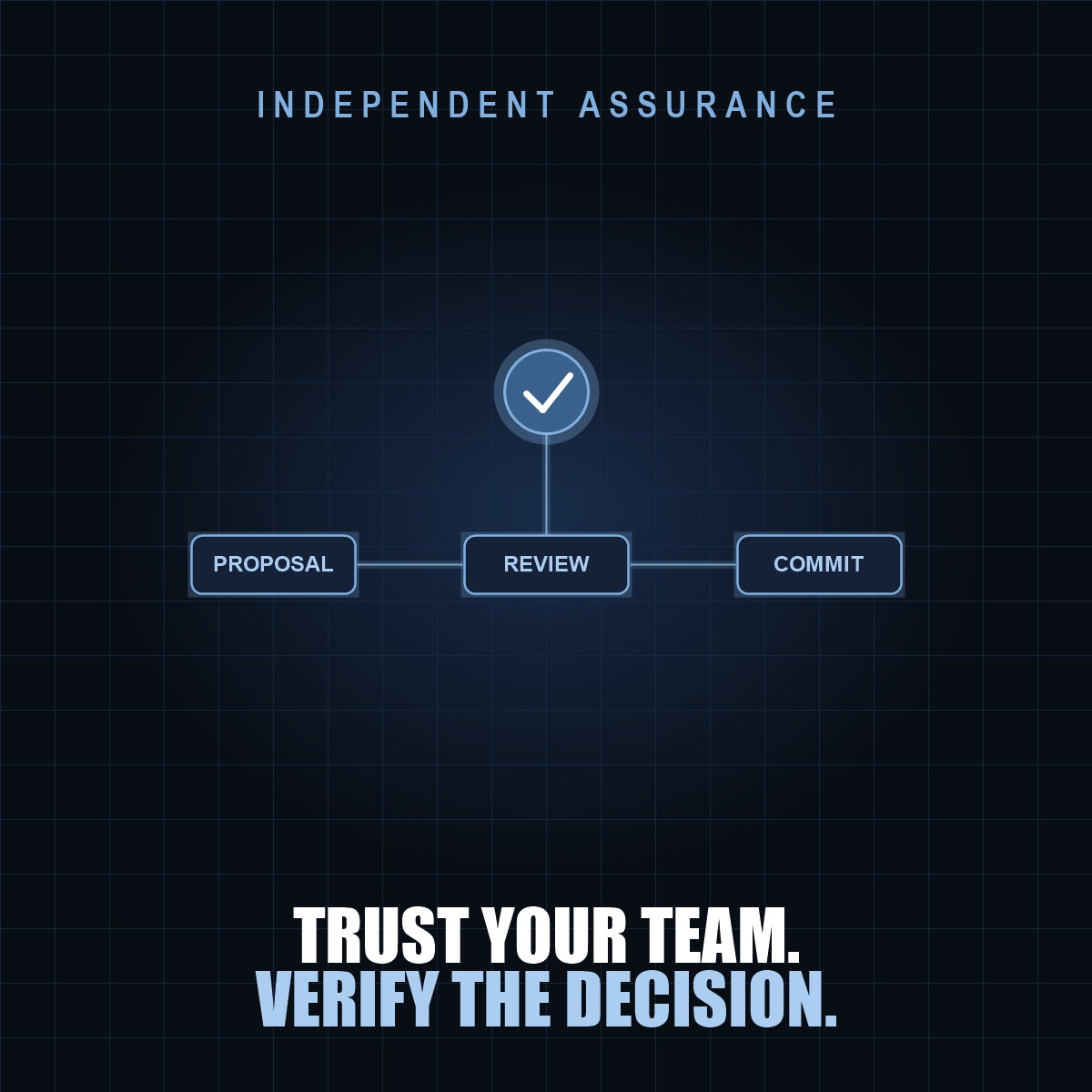
We assess any proposed piece of work — internal designs, vendor proposals, integrator bids — for soundness, hidden cost, lock-in, and the trade-offs no one put on the slide.
Before a major commitment, we independently verify that the options presented to you were genuinely the best available — and tell you plainly if better ones exist.
When your team is right, we say so — in writing. An independent endorsement gives leadership the confidence to move fast, and gives your architects the credibility they've earned.
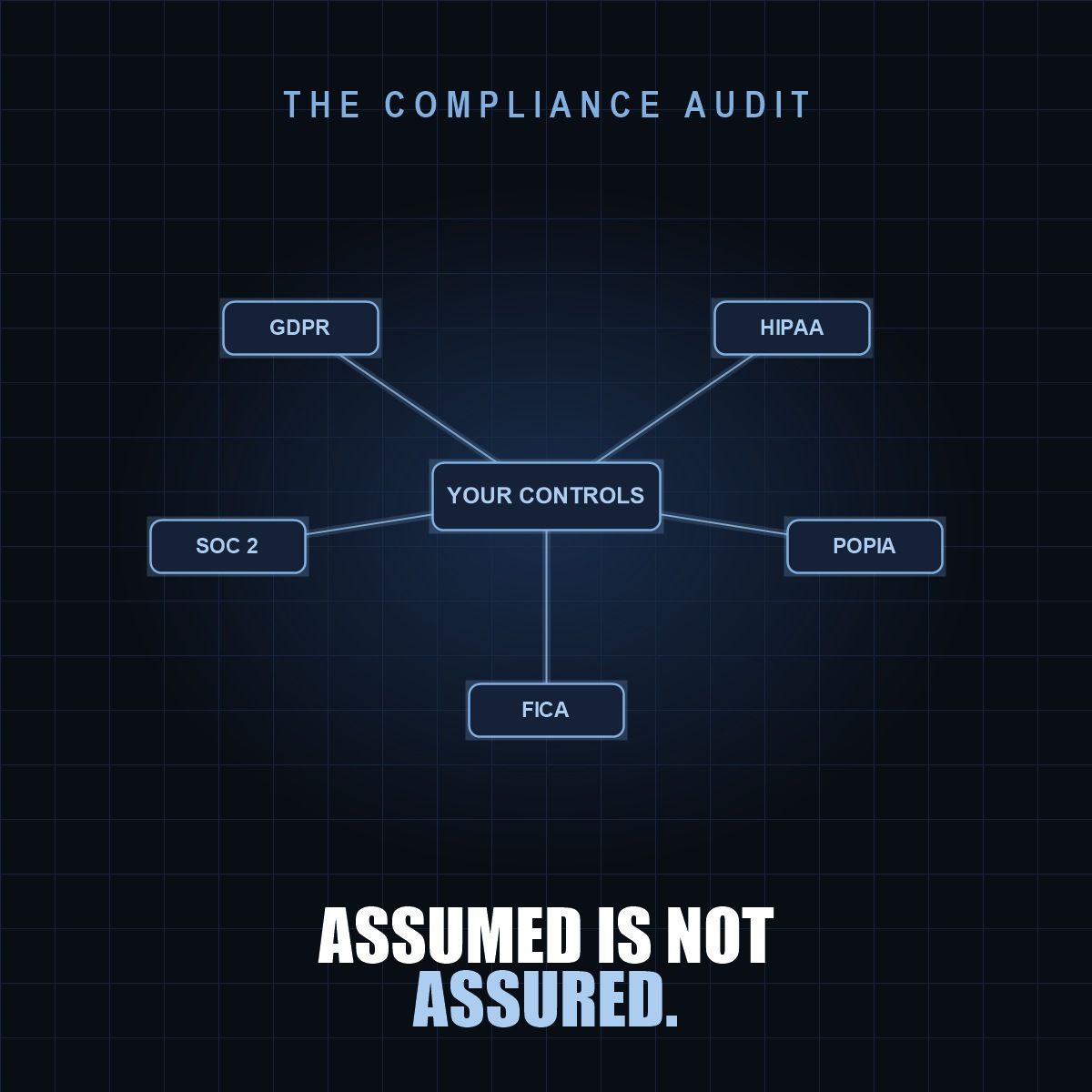
A systematic evaluation of your technology controls, policies and procedures — measured against both your internal objectives and your external regulatory mandates. Assurance that your IT systems genuinely support the business goals they were built for, while holding the line on standards such as GDPR, HIPAA and SOC 2 — and, for South African organisations, POPIA and FICA. Equally suited as preparation — finding the gaps before a regulator, insurer or acquirer does — or as verification that your existing controls hold up.
Every assessment is technology-agnostic and covers all major clouds. We hold no vendor relationships and sell no implementation work — the assessment is the product, so the advice has nothing to protect.
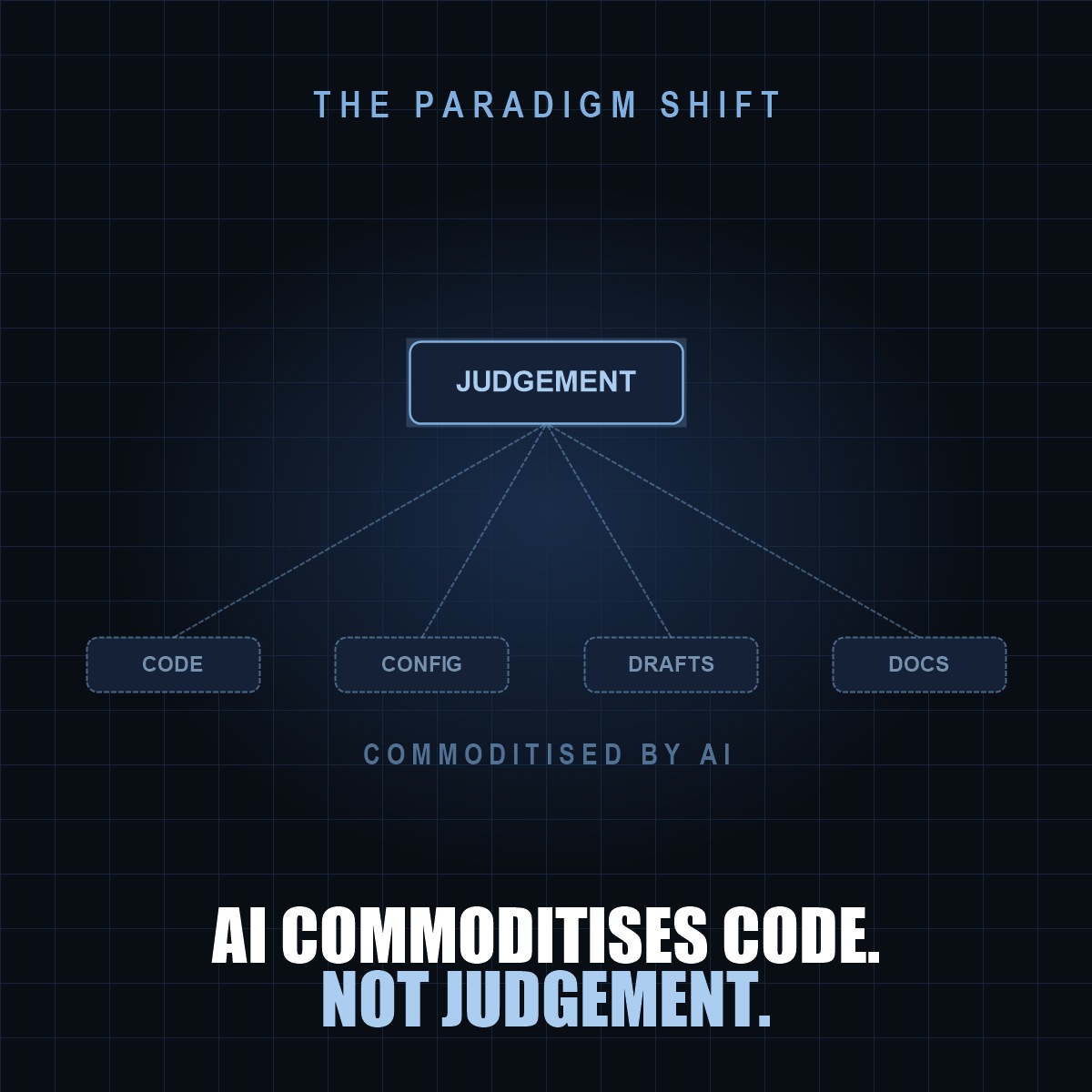
Software delivery is undergoing its largest shift in a generation. AI is commoditising implementation — code, configuration, even first-draft designs are becoming cheap and fast. What it cannot commoditise is judgement: knowing what to build, what to reject, and what the organisation can defend.
That inverts the economics of an architecture practice. Practices built to produce — diagrams, documents, standards — are automating themselves into irrelevance. Practices built to decide are becoming the most valuable function in the technology organisation. Most sit somewhere in between, without a deliberate plan for the crossing. We assess whether your practice is provisioned for that shift. In confidence, we review:
You receive a plain-language readiness assessment: where the practice stands, where the exposure is, and a defensible path for repositioning it — delivered directly to leadership, with the same discretion as everything else we do. For practices in transition, we also offer standing advisory support.
Behind the pen name is not one practitioner but a standing network of senior enterprise architects — collectively, hundreds of years of experience across domains, industries and regulatory environments. Where a review needs deep specialist judgement — data, security, payments, integration, compliance — the relevant expert joins the engagement, under the same discretion.
Landing zones, identity, governance and the full first-party service catalogue.
Multi-account structures, well-architected reviews, and the depth of the oldest hyperscaler catalogue.
Data and AI-native architectures, global networking, and Google's own operating conventions.
The brand carries no name so that the work never carries yours — no announcement, no consultants in the lobby, no signal to the market or the organisation that a review is under way.
Meet us discreetly in your office, or offsite over a coffee. Findings are delivered directly to you and to no one else. What you do with them is entirely your decision.
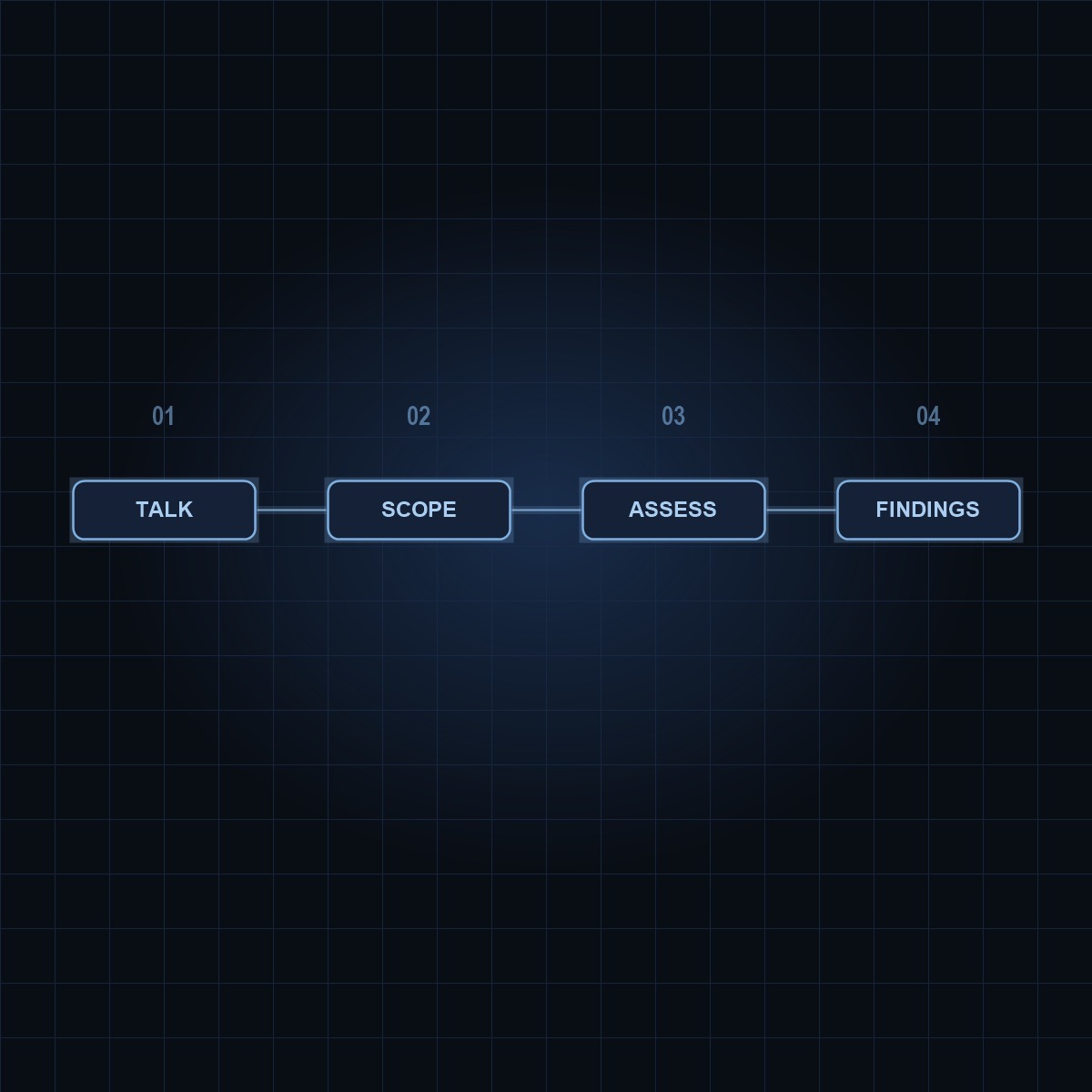
You tell us what's on your desk. No documents needed yet.
We agree what's being assessed and who, if anyone, we speak to.
We review the proposal against the requirements, the constraints, and the options that weren't presented.
A plain-language verdict: sound, sound-with-conditions, or here's the better option — and why.
If there's a proposal, an architecture or a practice that deserves an independent view — at any level of discretion — start with a conversation.